
Deb DeCicco
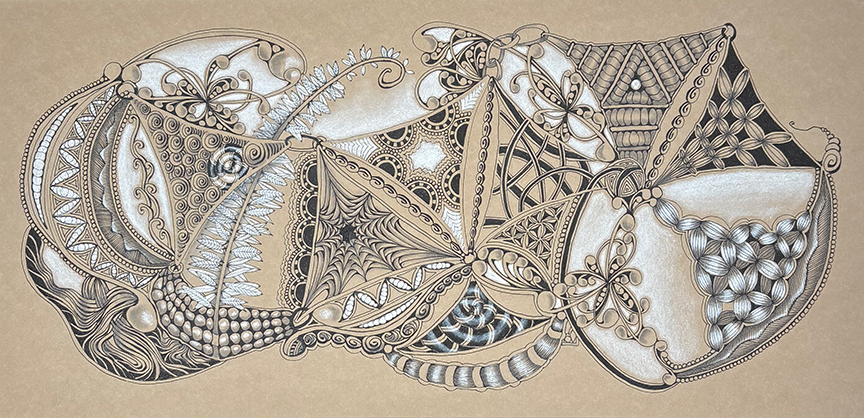
While my art comes in different media, I think it is best described as joyful botanical images.
About Deb DeCicco
How would you describe your background?
Deb DeCicco has been a self taught, free-lance artist for over 30 years, working in Moku Hanga Wood-block prints, fiber arts, book arts, drawing and watercolor. She has studied at the MFA School and the Kaji Aso Studio, Boston; with Matt Brown, April Volmer and other printmakers. Deb was the Director of the School of Arts and Crafts at the Sharon Arts Center for 10 years. She designed and crafted a line of handbags that sold in 40 stores in 6 states.
When did you know that you wanted to be an artist?
There was never one moment when I knew I wanted to be an artist. I was just always
creating. Sometimes they were traditional art pieces. Sometimes I was designing and making clothing and handbags, making baskets, designing and supervising the building of a post and beam house. But always there was drawing.
What would surprise people to learn about you?
People may be surprised to know that when I’m making a detailed botanical drawing in colored pencil, I always remember the days when I was a child, designing clothes for paper dolls and coloring them with colored pencil. Yes, I still have a few!
How would you describe your art to someone who has never seen it?
While my art comes in different media, I think it is best described as joyful botanical images.
What art-related accomplishment are you proudest of?
The art project I am most proud of is the exhibit that I initiated and set up for the special education students and clients at Crotched Mountain Rehabilitation Center. Their work was completely unique, beautiful and educational for everyone who viewed the show.
How would you describe your art process?
My art process may begin with an effort to capture something in nature that interests me. I begin with the part that most captures my attention for its beauty or complexity. Then I select and discard sections of the scene to suit the composition.
I consider and assess the composition continuously.
What is your usual studio/working day like?
My art making time and place is different each day but when I sit down to work on a piece I begin by assessing the pros and cons of the piece as it stands and decide on the most important aspect to work on at that time; what the piece needs. Sometimes the piece I’m
working on gets to a place where I’m not sure what’s next so I set that aside and start a new work or do something toward artmaking that’s not actually making art; read and look at art books, clean or reorganize the space and supplies, consider matting and framing etc.
What is the most delightful part of your life outside of art?
The most delightful part of my life outside of artmaking is spending time with my friends and family.